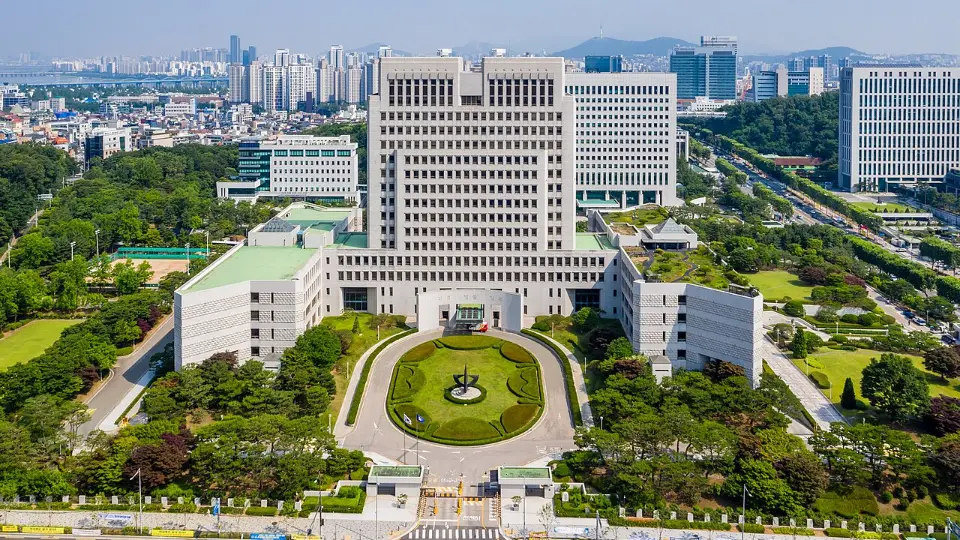
On 2 November 2026 the National Court Administration of the Supreme Court of Korea (법원행정처) published the results of a survey on false citations generated by AI in court filings. Judges at courts of all levels answered between 6 and 16 October 2026, and 360 responded. According to the Administration's press release, about 80% of the responding judges who handle civil, family and administrative cases said they had seen filings that cited non-existent or false precedents or other material. The Administration said a legal basis for administrative fines should be created through amendments to Korea's Civil Procedure Act and Criminal Procedure Act.
What the judges reported
The survey allowed multiple answers. Among the judges who had seen such filings, and with several answers allowed, 196 (80.7%) had seen citations of precedents that do not exist, 159 (65.4%) citations of precedents whose content was misstated, 41 (16.9%) false or non-existent statutes, and 10 (4.1%) false or non-existent articles or other literature.
Asked who filed them, 164 judges (69.5%) named parties acting in person and 136 (57.6%) named lawyers acting as counsel or defence counsel. The release gives examples: an AI-made fake judgment copying the format of a Supreme Court judgment; a Supreme Court case number paired with an unfamiliar legal rule that no search could find; real holdings altered or cited for a point they do not support; and text from a chat with an AI tool, including litigation strategy notes, left in a filing.
91.7% of respondents said an institutional response is needed, and 64.8% said it is very necessary. The measures most often proposed were a legal basis for fines, a duty to verify cited authorities, and sanctions such as referring lawyers who repeatedly file false citations to the bar for discipline.
The plan: fines written into the procedure codes
The Administration will prepare measures for both legislation and court practice on the basis of the survey. It considers that the Civil Procedure Act and the Criminal Procedure Act should be amended to give a legal basis for fines (과태료), and it will consult the Ministry of Justice and other bodies and submit its opinion to the National Assembly. It is also considering a notice on precautions for AI use on the electronic litigation website.
The release gives two reasons. A false citation forces the opponent to spend time and money checking and answering it, which is hardest for people without a lawyer, and it slows the case down. No draft amendment has been published, so the amount of any fine, and whether it would fall on the party or on counsel, are not yet known.
Tools Korean courts already use
The survey builds on a task force the Administration set up in November 2025. When the task force reported on 31 March 2026, it said that under current law a court may order a party or its representative to bear the litigation costs caused by false citations, and may ask the Korean Bar Association to discipline a lawyer who cited unverified AI-generated statutes or precedents, according to Segye Ilbo. The same report said that since 20 February 2026 the judiciary's information disclosure portal has offered a function for checking whether a cited case number exists. Courts have also started to record the problem in their reasoning. In June 2026 the Patent Court stated in a judgment that many precedents relied on by the plaintiff did not exist; see our note on the Patent Court judgment.
How Türkiye has handled the same problem
In Türkiye the question has so far been handled with general tools. In a case reported in June 2026, the Kızılcahamam Civil Court of First Instance found that Court of Cassation decisions cited in a defence petition could not be found on UYAP, the national judicial network, in the form given. It wrote to the Ankara Bar Association and the public prosecutor (case note). The Korean proposal points to a different model: alongside costs orders and bar referrals, a fine laid down in procedural law and imposed by the court within the case itself. Our review of the AI hallucination cases covers how courts in other countries have responded.
Whether the Korean proposal becomes law is a matter for the National Assembly.
Sources: National Court Administration of the Supreme Court of Korea, press release "AI 허위 판례 등 인용 관련 설문조사 결과" (results of the survey on citations of AI-generated false precedents), 2 November 2026; Segye Ilbo, report on the National Court Administration task force, 31 March 2026. General information, not legal advice.